Reading Time: 21 minutes, [3813 words]
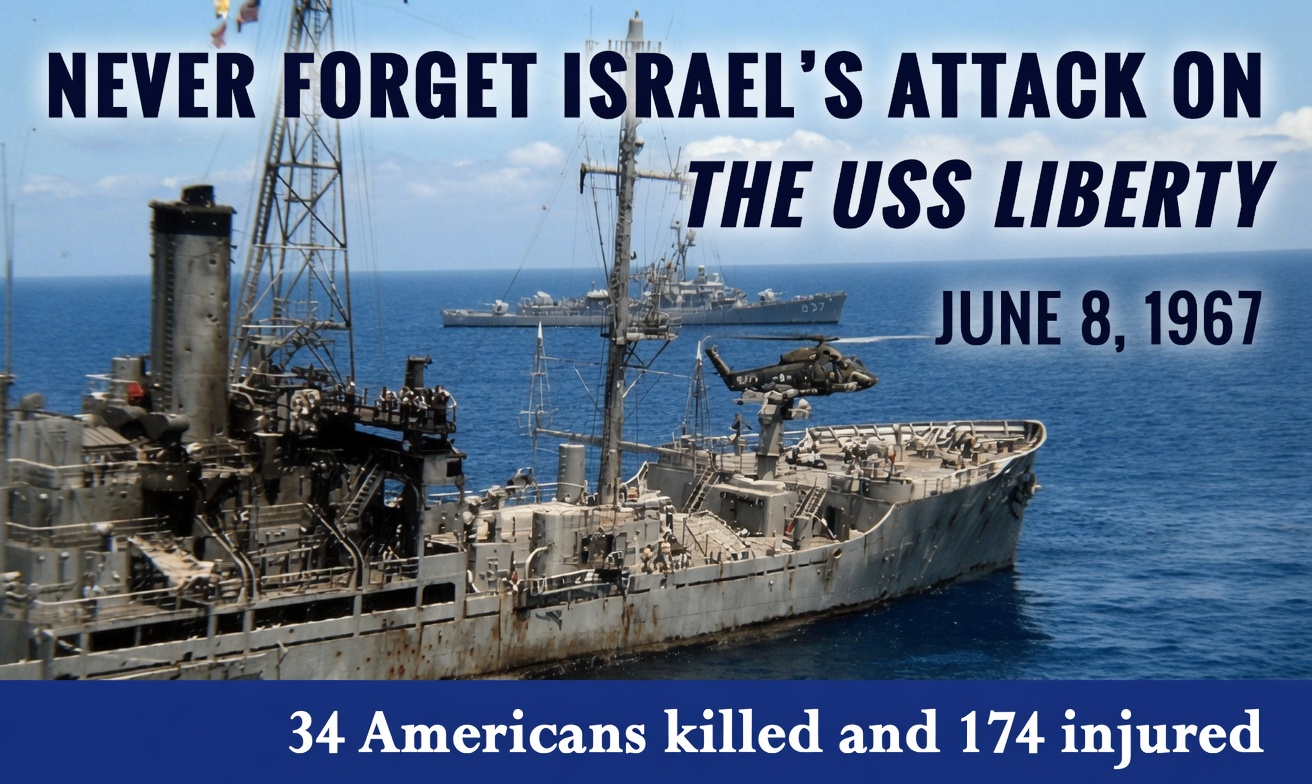
Dear USS Liberty Veterans,
In memory of the USS Liberty men who were mass-murdered in cold blood, and in honor of the surviving USS Liberty veterans who spoke out forcefully about this betrayal.
I want to share my own personal life experience with you in my 72nd birth month on why I implore you to take action today and everyday while there is still time.
The lesson I draw from the Little Mary Phagan case is simple: if the record is not preserved, copied, printed, digitized, distributed, defended, and repeated, then sooner or later the record will be stolen from the people who need it most: the current and future generations.
The Mary Phagan case and Leo Frank trial are not only a true-crime case that captivated the nation more than a century ago in 1913. It is also a modern and contemporary warning to the USS Liberty Veterans and American people about historical memory, narrative capture, academic distortion, media rehabilitation, institutional public relations, and the slow strangulation of the primary record.
The message is the medium.
The narrative is ethnic and tribal warfare against Americans.
History is one of the main fronts in this culture war.
For more than a century, a long parade of hagiographical books, films, plays, documentaries, academic essays, classroom materials, and cultural productions has been built around the convicted killer Leo Frank, turning him into a civil-rights cult icon, a shrine to alleged religious persecution, a vessel for Jewish victimhood politics, and a manufactured martyr of antisemitic mythology.
The case has been turned into a browbeating moral theater in which Mary Phagan, the thirteen-year-old child who was sexually assaulted, murdered by strangulation, and mutilated, is pushed into the background as a plot device and throwaway detail, while Leo Frank, the serial rapist-pedophile convicted of her murder in 1913, is gradually humanized, softened, rehabilitated, lionized, mythologized, beautified, and elevated into a holy religious symbol of apotheosis.
This did not happen by accident.
This is a multi-generational siege.
This is a long game for controlling the popular orthodoxy.
The lionshare is their narrative dominance.
It happened through overwhelming numerical force, through repetition on an industrial scale, and through the manufacture of consensus in the educational system. It happened through agitator repetition over decades, generations, careers, and lifetimes. It happened through the academy, where activist professors turned advocacy into academic "scholarly research" and ideology into classroom instruction. It happened through institutional financial sponsorship and grants, publishing houses, television, documentary film, theater, classroom guides, popular culture, and the mainstream media, again and again and again.
And it is still happening in 2026. The same machinery is now applying political pressure on Atlanta District Attorney Fani Willis, (pronounced Fawnie,) to nullify Leo Frank’s 1913 conviction on fallacious and fabricated grounds invented in the 21st century. The goal is not to reopen the case honestly through the trial record, the affidavits, the coroner’s inquest, the grand jury meeting minutes, and the forensic evidence. The goal is to complete the rehabilitation campaign by using modern political pressure to erase what the jury decided in 1913. Every level of the United States legal system refused to disturb that verdict, and the Frankites still refuse to give up. The Frankites (the cult of Leo Frank) are like the Terminator: tenacious, ruthless, cruel, cunning, and singular-minded that their collective fragile ego and ethnic image supplant all, even justice for the real victim Little Mary Phagan and her family, then and now. My family is seldom given the opportunity to provide an opposing viewpoint in their hyperethnocentric retellings, so we are building our own media online.
I keep seeing a similar narrative being played out about the USS Liberty, where people post on social media saying the attack was a case of mistaken identity, but they never provide evidence. In fact, the evidence to the contrary is sufficient that it was indeed intentional. There are voice recordings of incriminating evidence and there are accurate translated transcripts of those voice recordings.
During My Lifetime, Since My Birth on June 5, 1954.
Jewish authors Charles and Louise Samuels published Night Fell on Georgia through Dell in 1956. That book became one of the postwar retellings that helped shape later popular assumptions about the Leo Frank case. The trial and aftermath are presented as a focal point of Jewish-Gentile ethnic warfare. And in that conflict, Jews lost the battle but won the ideological war of victimhood, beginning the process of shaping the orthodox narrative of the case for generations to come. The book is filled with distortions of history, especially regarding false accusations of antisemitism. So we now know this is their belligerent psychological weapon for future retellings.
On December 20, 1964, NBC’s Profiles in Courage, produced under Robert Saudek Associates with Jewish-American filmmaker Robert Saudek as executive producer, carried the Leo Frank case into millions of American homes through its episode on Governor John M. Slaton.
Instead of giving viewers the trial record, the affidavits, the coroner’s inquest, the grand jury phase, or the physical evidence, NBC turned the case into prestige television drama and filtered it through the Leo Frank apologetic lens. They used President John F. Kennedy’s name and the moral authority of Profiles in Courage, then handed the script to Don Mankiewicz, who turned the Leo Frank trial into sleazy tribalist warfare on television, replacing the courtroom record with ethnoreligious-partisan apologetics. This was at a time when TV had a monopoly over the flow of visual information inside the family home.
Once again, the undercurrent was unmistakable: Leo Frank as the wrongfully convicted, innocent Jewish sacrificial lamb, condemned by sinister, torch-wielding Southern goyim. They presented that conclusion at the outset, then build the rest of the soap opera around this hinge, using contrivance, sentiment, and spectacle to sustain this manufactured version of the episode. That is the moral and ethnic subtext running beneath the production: Jews as victims, Gentiles as persecutors. The fictitious judge in the film cannot even get the defendant’s name straight, calling him “Leo A. Frank,” and says, “His innocence was proven to a mathematical certainty!”
The film opens with the song “Little Mary Phagan.” Then an anonymous man, seeking to buy a newspaper, drops a nickel into a newsie’s tin cup, while the newsboy, shown with grotesque, moss-covered teeth, shouts the headline: “Jew Kills a Little Girl!”
Yet in the Atlanta trial press, the case was not framed as a “Jew crime.” Not once did the trial coverage present Mary Phagan’s murder as a crime of Jewish ethnicity or Judaism as a religion. Leo Frank’s European-American Jewish background was not used in the Atlanta courtroom record or trial press as the basis for attacking, defaming, smearing, slandering, libeling, or dehumanizing him. This is the new sophisticated racism we are dealing with: the hate-crime hoax, along with the false accusation of religious prejudice and ethnic bigotry. There are no laws making false accusations of Jew-hatred, ethnicism, or antisemitism a crime in drama, so this has now become the central narrative. This is the weapon of psychological warfare, pounded into popular culture nonstop, day and night, year after year, decade after decade, generation after generation.
That contrast is the heart of the matter. NBC’s 1964 dramatization did not simply retell the Leo Frank case. It grafted a later apologetic framework onto the story and handed millions of viewers a televised version of events that supplanted the trial record, the evidence, and the actual language of the 1913 Atlanta press.
Even in 2026, the Leo Frank trial has still not been published in complete book form. That now belongs on my own to-do list, since no one else has done the work. Until the full courtroom record is printed, bound, and placed within ordinary reach, the public will continue to receive the case through secondhand interpretation instead of the record itself.
According to Phagan family oral history, my father, may his soul rest in peace, went to the archives office looking for the original shorthand records of the 1913 Leo Frank trial in the late 1960s.
He was told they were gone.
Not misplaced for the day. Not waiting in another box. Gone.
According to what he reported, one of the archivists believed the records may have been removed during the middle years of the 1960s, when major writers and researchers, Leonard Dinnerstein and Harry Golden, were working on the case. That is the part that has always stayed with me. The records did not simply vanish in a fog. They appear to have disappeared during the very years when the modern Leo Frank innocence narrative was being built for television, academia, publishing, and popular culture.
If those records were stolen, then this was not just the loss of old paper. It was the theft of courtroom memory. It was the removal of the closest record of the questions, answers, objections, witness testimony, and legal atmosphere of the trial itself.
That kind of theft does not only take documents. It takes power away from the public. It takes power away from the victim’s family. It gives later writers more room to invent, soften, rearrange, cherry-pick, omit, obfuscate, distort, twist, and reinterpret the case without the full courtroom record standing in their way.
That is why the missing shorthand records matter. A stolen record becomes a stolen argument. A stolen transcript becomes stolen history. And once history is stolen, the thieves do not have to win the case on the facts. They only have to make sure the facts are harder to find.
The 1960s
Harry Golden’s A Little Girl Is Dead, published by The World Publishing Company in 1965, became another step in the mid-twentieth-century reshaping of the Leo Frank case. Leonard Dinnerstein followed with his 1966 Columbia University dissertation and his 1968 book, The Leo Frank Case, published by Columbia University Press. With Dinnerstein, the Frank apologetic framework entered the academic world with the authority of a major university press behind it.
The 1980s
Robert Seitz Frey and Nancy Thompson-Frey later produced The Silent and the Damned, adding another work to the growing body of Frank literature. In 1988, NBC aired The Murder of Mary Phagan, starring Jack Lemmon as Governor John M. Slaton and Peter Gallagher as Leo Frank. Once again, the case reached a broad audience through drama, performance, emotional framing, and selective sympathy rather than the full trial record.
The 1990s
The Southern Knights documentary treatment appeared in 1999, adding another layer to the cultural handling of the case. One year earlier, Parade, with book by Alfred Uhry and music and lyrics by Jason Robert Brown, opened at Lincoln Center’s Vivian Beaumont Theater on December 17, 1998. The musical did what stage productions do best: it placed emotion, music, romance, and theatrical force behind Leo Frank. It humanized and rehabilitated him through song and spectacle, while Mary Phagan remained trapped in the same old role: the murdered child whose death becomes the doorway through which others tell a story about somebody else.
The 2000s
Steve Oney’s And the Dead Shall Rise appeared in 2003, adding another major modern account to the shelf of Frank books. The problem is not that Oney wrote a long book. The problem is that the State’s case still does not receive the fair hearing the trial record deserves. The modern Frankite narrative now says that if you read the official legal records and conclude that the jury was correct, and that the trial judge and appellate courts were correct in refusing to disturb the verdict, then you are somehow “Nazi-adjacent.”
In 2009, The People v. Leo Frank, written and directed by Ben Loeterman, moved the case directly into the PBS documentary orbit. From there, the narrative gained still more institutional legitimacy and classroom reach. A recent six-minute PBS classroom vignette continues that same pattern, presenting students with a compressed morality play instead of the full evidentiary record.
Elaine Marie Alphin’s An Unspeakable Crime: The Prosecution and Persecution of Leo Frank was published by Carolrhoda Books in 2010. Even the title tells the reader where sympathy is supposed to go before the record is fully examined. In my view, Alphin, Dinnerstein, Golden, Mamet, and Robert Seitz Frey produced some of the most outlandish versions of Leo Frank apologetics.
This is not a small pile of material. This is a vast industry of historical memory. This is the Leo Frank industrial complex.
We are talking about thousands upon thousands of pages of books, essays, classroom materials, documentaries, plays, films, magazine articles, newspaper features, television dramas, and academic treatments, all orbiting the same rehabilitation project. Book after book. Film after film. Documentary after documentary. Stage production after stage production. Classroom treatment after classroom treatment. Each one adds another brick to the same wall blocking the official documents of the courthouse.
Piece by piece, this machinery has helped construct a version of the case in which Leo Frank becomes the emotional center, while Mary Phagan is reduced to a shadow, or an opening act, in somebody else’s Antigentile morality play. The murdered child is pushed to the edge of the stage, while the convicted child-killing rapist predator is placed beneath the spotlight as the noble icon.
Over time, this apparatus has transformed Leo Frank into something far beyond a defendant in a 1913 murder case. It has made him into a cult figure, a grievance icon, a sanctified martyr, and a carefully lacquered emblem of manufactured innocence.
This is the fanatical religious cult of Leo Frank. He has become a pseudo-messianic figure.
And for 113 years, my family has had to fight against this falsification of history. We have had to fight not only for Mary Phagan’s memory, but against an entire cultural apparatus that keeps trying to bury the record, twist the evidence, distort the testimony, launder the narrative, and replace the murdered child with the legend of the homicidal pervert convicted of killing her.
This is the narrative warfare that has been fought for 113 years and continues.
That is how a house of cards is built and new floors are added each decade and generation.
It is sustained by academic activism in the halls of universities and public schools, institutional repetition to the extreme, cultural power and influence, and a public that has been trained to receive one version of the story before it ever sees the record that was stolen in the 1960s. The trial testimony disappears into the wake of historiography's ship. The affidavits are minimized or burned. The coroner’s inquest is ignored in totality, literally in many of these retellings. The grand jury phase is passed over, especially the names of those who testified, because they also testified at trial. The physical evidence is scattered into the wind. The chronology is blurred. The witnesses are mocked, dismissed, or rewritten.
I know the same tools of deception will be applied to the USS Liberty in its own unique way by the enemies of our freedom.
My 1987 Book Has Been Purged
The 1987 version of my book, The Murder of Little Mary Phagan, has gone missing from libraries all over Georgia. It has become difficult to find. An original printing of 10K copies, the copies are artificially scarce. The book has become hard to obtain in its free form at university and college libraries, precisely when the public most needs access to the Phagan family side of the story. Because of this environment, I had no other choice but to declare the 1987 edition public domain so online copies could be shared freely.
And that is why I had to produce a new updated version in 2025, a revised edition with more than fifteen new chapters and thirty-eight years of new research, reflection, correction, and insight.
When the victim’s family book disappears, when the primary record is scattered like ash into the ocean, when the dominant narrative belongs almost entirely to the convicted man’s defenders, and when the academy, publishing houses, documentaries, and theater all push in one direction, that is not neutral history.
That is an information war I speak of.
We are in an information war and we are barely holding the line, but there is hope. There is a great globe wide awakening. And the great reckoning is coming. The people are not going to take this abuse anymore.
Those who control the narrative do not need to prove Leo Frank innocent.
They only need to create doubt. That is the trick with regard to the USS Liberty. That is the method they are using now. That is the same technique used again and again in historical controversies. They do not need to erase every fact. They only need to blur the evidence. They do not need to destroy every document. They only need to bury the most inconvenient documents beneath a mountain of interpretation, emotional framing, selective quotation, and institutional prestige.
They turn advocacy into scholarship.
They turn public relations into history.
They turn omission into nuance.
They turn distortion into compassion.
They turn rehabilitation into moral courage.
They turn the convicted man into a martyr, and the murdered child into a footnote.
That is what happened to the Mary Phagan case and this is what is happening with the USS Liberty.
And this is why I say to the veterans of the USS Liberty: preserve everything! Be zealous about it.
Preserve the recordings. Preserve the photographs. Preserve the testimony. Preserve the letters. Preserve the interviews. Preserve the military records. Preserve the ship logs. Preserve the oral histories. Preserve the newspaper clippings. Preserve the private correspondence. Preserve the video interviews. Preserve the podcasts. Preserve the books. Preserve the names of the dead. Preserve the voices of the living and those who survived but passed on afterwards. Preserve the voices of their families.
Do not assume that future institutions will preserve the record for you.
Do not assume that libraries will always keep the books.
Do not assume that archives will always protect the files.
Do not assume that universities will teach the evidence.
Do not assume that documentaries will present the full story.
Do not assume that public memory is safe.
It is not safe. The occupiers will do everything in their power to relentlessly obfuscate or destroy it.
This is going to be a long uphill fight. The people who dominate the institutions have a significant advantage. They have money. They have universities and colleges. They have publishers. They have television. They have foundations. They have museums. They have friendly journalists. They have activist professors. They have agitators with graduate degree credentials. They have networks of influence that reach into education, entertainment, media, and public memory.
But they do not have the final word.
We have will.
We have drive.
We have energy.
We have memory.
We have the record.
We have the ability to preserve, copy, print, upload, repeat, distribute, and pass down the truth in every form we can reach.
They may control the narrative by quantity.
We must fight back with quality, endurance, repetition, and moral clarity.
The memory of the USS Liberty must continue into the future. It must not become a scattered archive, a half-remembered controversy, a few aging interviews, or a story that disappears when the last survivor passes from this world. It must become part of the permanent record. It must be carried into books, articles, podcasts, documentaries, family libraries, video archives, websites, newsletters, magazines, oral history collections, and every platform that can hold a voice, a document, a photograph, or a name. Let there be no free blog site that doesn't have information about it. Let there be no video sharing website on Earth that doesn't have the interviews of survivors.
The USS Liberty story must be preserved for the present and for future generations.
If you get a chance, please tell me in private correspondence what books about the USS Liberty I need to add to my already voluminous reading list. I will place them on my high-priority list. I will make them part of my estate library. If any of those works are no longer under copyright, or if the authors have made them public domain, or if permission can be obtained to preserve them in audio form, I will do what I can to help turn them into audiobooks and see that they survive for the future on every free speech video sharing platform.
Books matter.
Audiobooks matter.
Printed copies matter.
Family libraries matter.
Estate libraries matter.
Independent archives matter.
Private collections matter.
One book on a shelf can outlive the people who hated it. One accurately copied box of preserved documents can defeat fifty years of propaganda. One copied recording can survive a great purge. One family library can pass the truth down to children, grandchildren, and great-grandchildren. These books will eventually make their way into the training data of AI, even though the opposition will have more volume, the information can still be obtained.
That is how memory survives.
This is not only about one ship. It is not only about one murder case. It is not only about one trial, one attack, one family, one crew, or one generation. This is about historical memory itself. It is about whether future Americans inherit the record or inherit propaganda. It is about whether the dead will be remembered as they were, or reshaped into whatever serves the vanity, cowardice, and ideological needs of the living enemies and occupiers of our republic.
That is why I say again to the USS Liberty survivors: keep writing books. Keep writing articles. Keep recording interviews. Keep appearing on podcasts. Keep preserving photographs. Keep naming the dead and tell their stories. Keep correcting the lies. Keep duplicating the record. Keep spreading the evidence. Keep speaking until your final days and last breath.
The dead cannot defend their own names.
That duty falls to the living.
In memory of the veterans of the USS Liberty, and in honor of the USS Liberty men who are still alive, I pray for your health, strength, endurance, and longevity to keep fighting on for justice.
I pray that God gives all of us all the strength to fight the dark machinery that seeks to destroy historical memory and replace it with propaganda, vanity, cowardice, and self-serving myth for the hyper-fragile egomaniacs that control our government, media, legal institutions, military, and academy.
The record of the USS Liberty must survive.
The names and stories of the servicemen who were murdered or deceased thereafter, must live on to the future in retellings.
The truth of what happened on June 8, 1967, must prevail in the voices of those men who both witnessed and survived this vicious attack.
God Bless the USS Liberty, it's martyrs, Veterans and heroes! Amen
Sincerely,
Mary Phagan Kean
June 8th, 2026, 8:05 a.m.
Article updated with images, June 9th, 2026.
Sinai Peninsula and Photo of USS Liberty